
What Is Moissanite?
Moissanite is silicon carbide, a real gemstone discovered in a meteorite crater in 1893 and now lab-grown for jewellery because nature makes it too rarely to wear. It stands on its own: brilliant, durable, ethical, and unlike anything mined from the earth.
I get asked this question most from people who've heard the word but aren't sure what it actually is, so let me start with the essentials. Moissanite is not a diamond substitute or a fake diamond. It's not cubic zirconia or a synthetic diamond. It's a genuinely different gemstone with its own optical properties, its own sparkle, and its own reason to exist. And it changes things for anyone choosing jewellery made to last.
I chose moissanite for Miozuki because it carries the feeling I wanted the jewellery to have: confidence and resilience. The stone sparks brightly, but it is also strong enough for real life. That balance matters to me. It is not only about sparkle; it is about wearing something that can move with you and still keep its fire.
The past decade has seen moissanite shift from a niche choice to something tens of thousands of people wear every day. That shift happened because moissanite solved a real problem. Mined diamonds carry environmental and ethical questions. Lab diamonds are newer and less accessible. Cubic zirconia clouds and fades. Moissanite does none of those things. It's durable, it's ethical, and it's affordable enough that you can choose what feels right without a six-month financial commitment.
At a Glance
| Property | Moissanite | Why It Matters |
|---|---|---|
| Composition | Silicon carbide (SiC), lab-grown | Real gemstone, no mined diamonds involved |
| Hardness | 9.25 on the Mohs scale | Second only to diamond, durable for everyday wear |
| Optical effect | Refractive index 2.65–2.69, rainbow fire | More brilliant sparkle than diamond, distinctive character |
| Durability | Resists scratching, does not cloud over time | Lifetime jewellery, not a temporary fix |
| Origin | Lab-created in controlled conditions | Consistent quality, ethical, no mining impact |
The Moissanite Origin Story
In 1893, a French chemist named Henri Moissan examined a meteorite crater and found microscopic crystals of silicon carbide inside. It was an extraordinary discovery: a gemstone so rare in nature that the element was named after him. But there was a problem. The crystals in that crater were too tiny to cut into jewellery, and natural moissanite remained a scientific curiosity rather than something a person could actually wear.
A century later, researchers worked out how to grow moissanite in a laboratory. By heating silicon carbide in controlled conditions, they could create larger, gem-quality crystals that kept all of moissanite's natural properties but without the rarity problem. Today, every moissanite ring or pair of earrings is lab-created, which is exactly what makes it possible to own one at all.
The lab process matters, too. It means no mining, no environmental impact, no labour concerns. Every stone is grown from scratch in a facility, with consistent colour and fewer of the inclusions you might find in a mined diamond. For anyone building an ethical collection, moissanite's origin story is one of its strongest points.
The Science of the Sparkle
Moissanite's optical character comes down to one number: its refractive index. This is how much light the gemstone bends as it travels through. Diamond bends light at a refractive index of 2.42. Moissanite bends it at 2.65 to 2.69. That higher number means more light bouncing around inside the stone, and more light coming back out to your eye.
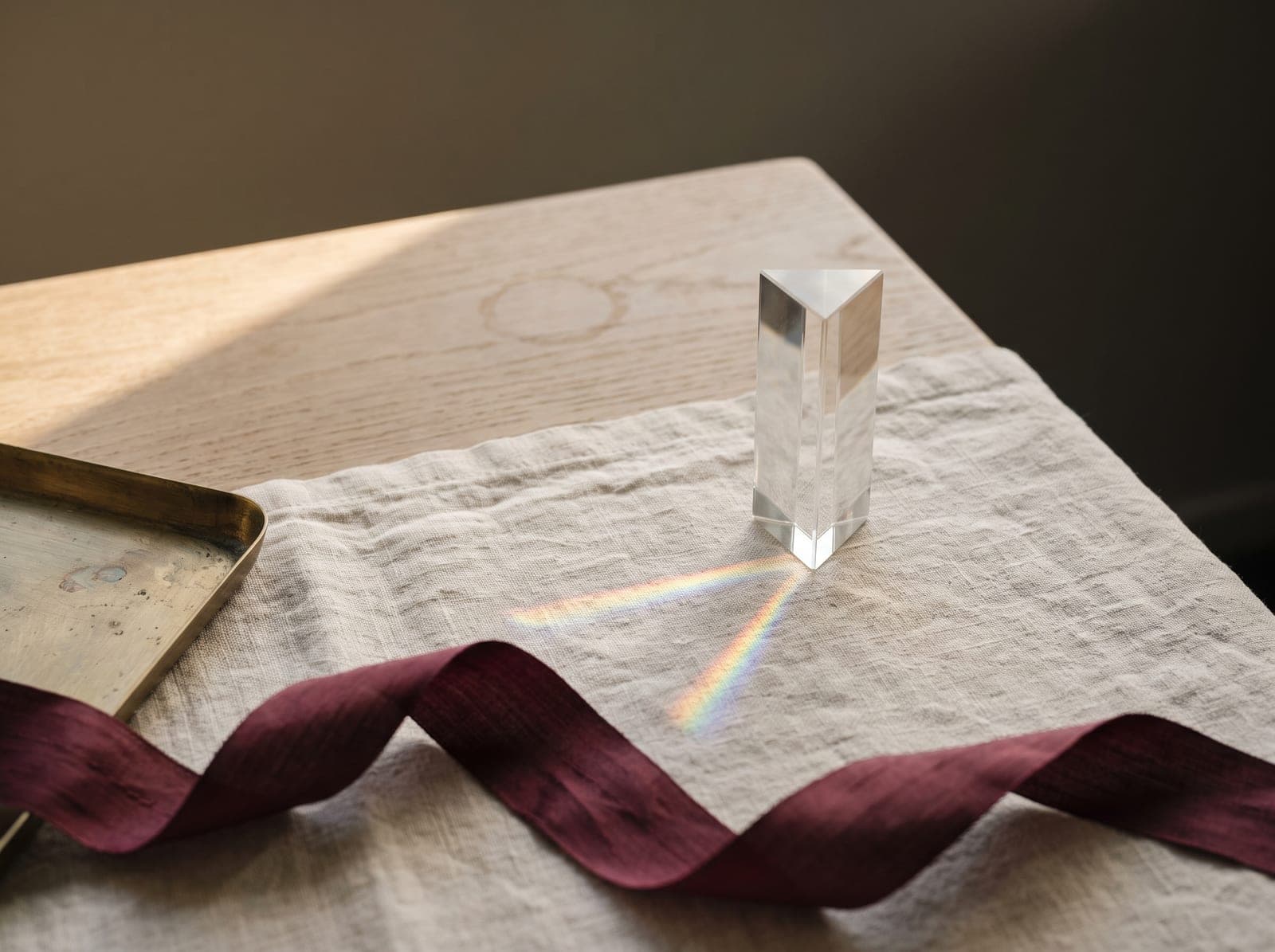
What you see is a gemstone that throws off more rainbow fire than a diamond does. In bright sunlight or under spotlight, moissanite glows with coloured flashes. In indoor light, the fire is there but more restrained. Some people love this visual character immediately. It feels alive, distinctive, unmistakably itself. Others prefer a more subtle sparkle and choose other options. Both choices are right, it comes down to what feels like you. The "fire question" is often more about personal preference and lighting than about the stone's quality. A moissanite ring in your everyday life reads as brilliance, not as something trying to be something else.
Why Moissanite Is Not an Imitation
I want to be direct about this because it matters. Moissanite is not a lower tier of diamond. It's not a "diamond alternative" or a "diamond substitute." Those phrases suggest something trying to be a diamond and falling short. Moissanite isn't trying to be a diamond. It's trying to be moissanite.
A diamond is pure carbon, crystallised under extreme pressure deep in the earth over billions of years. Moissanite is silicon carbide, grown in a lab over weeks. They're structurally different. They look different under magnification. They catch light differently. To someone trained to examine gemstones, they're unmistakably separate things.
But here's what matters more: to the unaided eye, a high-quality moissanite ring looks like exactly what it is: a real, carefully chosen ring worth wearing. It doesn't look "fake." It doesn't look cheap. It looks like real jewellery, because it is real jewellery. The difference is that it's real gemstone, made ethically, and it costs a fraction of what a mined diamond would.
The distinction sounds small, but it shapes everything. When you choose moissanite, you're not settling for something that mimics diamond. You're choosing a gemstone with its own character, its own story, and its own reasons to exist. That's the frame I work from when I design with moissanite.
The most common misunderstanding I hear is that moissanite must be fake, or that it should look exactly like diamond or cubic zirconia. It is none of those things. If that is your main concern, the moissanite vs cubic zirconia guide walks through the difference clearly. If someone is worried moissanite is "not real enough", I would rather they take their time, read a few comparisons, look at the stones in different light, and come back when they feel ready. A meaningful piece should never feel like it needs convincing. It should feel understood.
The Durability Question
Moissanite rates 9.25 on the Mohs hardness scale, which means only diamond (10) and a few lab-created alternatives sit harder. For daily wear, for engagement rings that live on your hand, for earrings you wear to work, for jewellery you actually use, this hardness translates to real durability. It resists scratching from everyday activities. You don't have to baby it.
There's a myth that moissanite clouds over time. It doesn't. The crystal structure of moissanite isn't prone to the surface degradation that can affect other gemstones. With basic care, a soft cloth wiping, mild soap cleaning, nothing harsh, moissanite maintains its clarity indefinitely. I've seen customer rings that have been worn hard for ten years and still throw light the same way. Store pieces separately from harder stones and rough surfaces to avoid scratches, and take jewellery off before using household cleaners or applying lotions.
For the full technical breakdown on durability, care, and daily-wear longevity, see our moissanite durability guide.
For rings, the stone is only one part of the decision. The metal around it shapes how the piece wears over time. Sterling silver keeps a moissanite ring accessible, while 9k gold gives a stronger long-term option for engagement-style or daily-wear rings. Miozuki moissanite rings can be chosen in S925 sterling silver or, on most styles, 9k gold in white, yellow or rose.
Ethical and Heirloom Value
Every moissanite piece is lab-grown, which means no mining, no environmental extraction, and no supply-chain concerns. If ethical jewellery is important to you, moissanite removes a major ethical question entirely. There's no forest cleared, no water contaminated, no worker safety question. The stone is created in a facility with controlled inputs and outputs.
And because it's durable, it's designed to be passed down. A moissanite ring you choose today could be the ring your daughter wears in twenty years. That's the philosophy behind every piece I design: jewellery made to be passed down, not replaced. Every Miozuki piece is built to outlast trends and to hold up to real life. Moissanite's durability and timeless sparkle make that possible in a way that is honest and accessible.
For more on the ethics of lab-grown stones and heirloom design, see our ethical engagement rings guide.
Frequently Asked Questions
Common questions
Is moissanite a real gemstone?
Yes. Moissanite is silicon carbide, a real mineral compound, lab-grown for durability and accessibility. It's not synthetic diamond or an imitation; it's a genuinely distinct gemstone with its own properties and character. It was discovered in nature (in a meteorite crater) and is now created in laboratories because natural moissanite is too rare for jewellery.
Can I wear moissanite every day?
Absolutely. Moissanite rates 9.25 on the Mohs hardness scale, making it suitable for engagement rings, earrings, and any piece you actually wear. It resists scratching and damage from daily life better than most gemstones.
Will my moissanite ring cloud over time?
No. This is a common misconception. Moissanite's crystal structure does not degrade or cloud with heat or regular wear. With basic care, a soft cloth and mild soap, your ring will maintain its clarity indefinitely.
How is moissanite different from cubic zirconia?
Cubic zirconia is much softer (8 to 8.5 on the Mohs scale versus moissanite's 9.25) and tends to cloud and lose sparkle after 1 to 2 years of regular wear. Moissanite is significantly harder and durable for a lifetime. For the full comparison, see our [moissanite vs cubic zirconia guide](/moissanite-guide/moissanite-vs-cubic-zirconia).
How does moissanite compare to a lab-grown diamond?
Both are lab-created, but they're chemically different gems. Moissanite is silicon carbide; lab diamonds are pure carbon. Moissanite has more sparkle and fire; lab diamonds have a more subtle light return. Both are durable and ethical. The choice depends on whether you prefer moissanite's distinctive brilliance or diamond's understated glow. See our [moissanite vs lab diamond guide](/moissanite-guide/moissanite-vs-lab-diamond-nz) for a detailed comparison.
Is moissanite a good choice if I want an ethical ring?
Yes. Lab-grown moissanite means no mining, no environmental extraction, and no supply-chain concerns. It's one of the most ethical gemstone choices available. If heirloom ethics matter to you, building something that lasts and passes down, moissanite ticks every box.
Explore the Full Moissanite Guide
Once you've understood what moissanite is, the next step is figuring out which moissanite is right for you. Every topic below gets its own deep guide:
- Moissanite vs diamond - Honest comparison of cost, durability, look, and what it really means to choose differently.
- Moissanite vs lab diamond - The choice that stops most buyers: where fire and price meet, and which calls to you.
- Moissanite vs cubic zirconia - Why these aren't the same choice, and where the real differences live.
- How to choose a moissanite ring - Carat, cut, shape, setting, and the 4Cs through a moissanite lens.
- White, yellow or rose gold for a moissanite engagement ring - How each gold colour changes the feeling of your ring on the hand.
- Moissanite grades and brands NZ - Forever One, Harro, NEO: what the tiers mean, where colour and clarity land.
- Moissanite earrings NZ - Studs, drops, hoops, and how to pick for daily life and your own glow.
- Moissanite durability NZ - Mohs hardness, how to live with it daily, the clouding myth, and what care actually means.
- Ethical engagement rings NZ - Lab-grown, no mining, and why heirloom ethics matter.
- Moissanite resale value NZ - The honest answer about holding value over time.
- Where to buy moissanite NZ - Transparent comparison and guide for New Zealand and Australia.
- Does moissanite look fake - Short answer: no. What people actually see when they look at your hand.
- Promise ring meaning - What a promise ring signifies, styles, and when to wear one.
- How to choose a promise ring NZ - Budget, self or gift, and the etiquette that guides your choice.
For Australians
Moissanite is gaining recognition across Australia too, with the same durability, ethical credentials, and brilliant sparkle. If you're in Australia and shopping for engagement rings, earrings, or bridal jewellery, moissanite is a strong choice. Lab-grown, no mining impact, and built for Australian life. The Australian sun is intense, and moissanite's hardness means it resists the kind of surface degradation that can affect softer gemstones in a high-UV environment. Salt air on the coast won't affect the stone itself (though basic care of any jewellery matters everywhere). We ship to Australia, and everything in this guide applies equally to your search, whether you're on the east coast or inland, in a major city or beyond.
Choosing moissanite is choosing a gemstone with its own character, its own story, and its own reason to exist. It's choosing durability, ethics, and a ring you can actually wear every day. Whether you're engaged, building a collection, or choosing something for yourself, moissanite has a place in fine jewellery designed to be passed down.